
See the skin analysis your customers would see.
Take the selfie below. Under a minute, no sign-up.
Book a demo with your productsLive. Same analysis a brand's customers get, in Thea's colors instead of theirs.
What the AI reads
What does an AI skin analysis do?
An AI skin analysis reads a selfie and identifies skin type plus eight skin parameters, each visualized on the photo and reported as a level or a 0–100 score. Higher score means more pronounced. It also shows a melanin view and reads skin tone, age and gender for context. Click through what the models see.
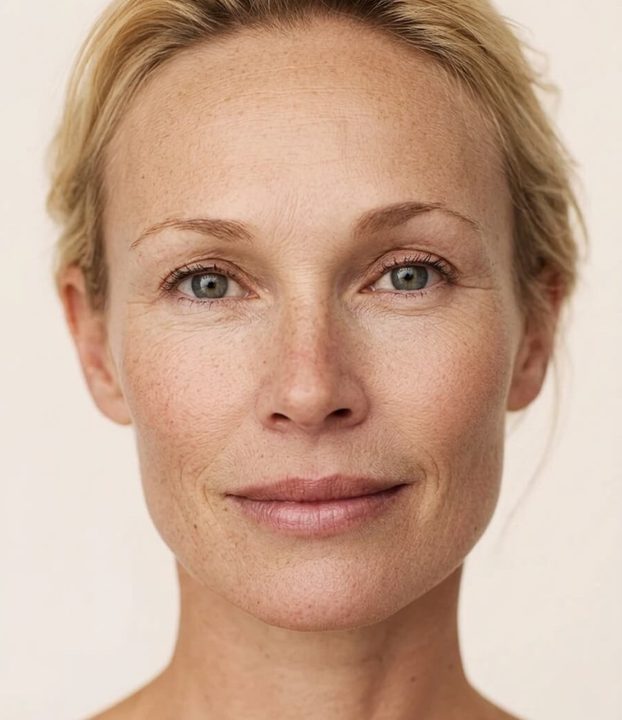
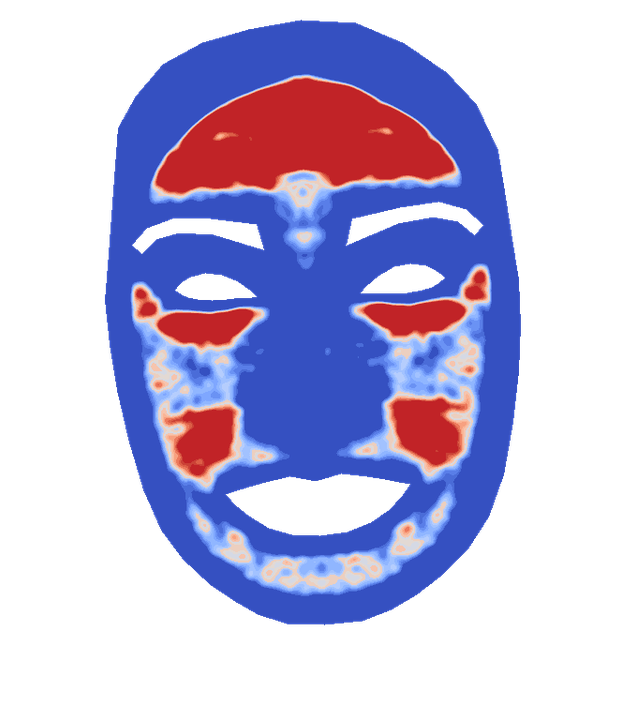

Little of this on the example face
Dryness
Her score
40
/ 100 · higher = more pronounced
What it reads
How dry the skin surface reads: water loss, a weakened barrier, tightness, fine dry lines. High score means drier. Even oily skin can be dehydrated, so dryness and oiliness are read separately.
How brands typically respond
Moisturizing and barrier-supporting care. Most brands make this their lead concern.
Oiliness
Her score
60
/ 100 · higher = more pronounced
What it reads
Excess sebum: shine and a film on the skin, typically in the T-zone. High score means oilier.
How brands typically respond
Gentle cleansing, light textures, mattifying care. Rich creams get ruled out.
Redness
Her score
1
/ 100 · higher = more pronounced
What it reads
Diffuse redness from dilated vessels, separate from blemishes. Causes range from sensitivity to UV, temperature and hormones. High score means more redness.
How brands typically respond
Soothing care for sensitive skin, fragrance-free, known irritants excluded.
Scales
Her score
0
/ 100 · higher = more pronounced
What it reads
Dry, dead skin cells detaching from the surface: small white or silvery flakes, often with tightness or itching. High score means more scaling.
How brands typically respond
Regenerating, barrier-repairing care. Gentle exfoliation where the range has it.
Lines
Her score
37
/ 100 · higher = more pronounced
What it reads
Visible lines and depressions across the face, from collagen and elastin loss, repeated movement and sun. Depth and count are read together. High score means more pronounced lines.
How brands typically respond
Anti-aging care and daily sun protection. Brands without an anti-aging line can hide this view.
Blemishes
Her score
0
/ 100 · higher = more pronounced
What it reads
Blackheads and inflamed pimples, detected and counted individually wherever they appear. High score means more active blemishes.
How brands typically respond
Gentle cleansing for impurities, clarifying actives, non-comedogenic textures.
Pigmentation
Her score
48
/ 100 · higher = more pronounced
What it reads
Dark spots from excess melanin production: sun, age, hormones, healed blemishes. High score means more visible spots.
How brands typically respond
Brightening care and sun protection.
Pores
Her score
2
/ 100 · higher = more pronounced
What it reads
Visible, enlarged pore openings, mostly from excess sebum or clogging. High score means more visible pores.
How brands typically respond
Pore-cleansing products and light moisturizers.
Melanin view
Her level
Medium
A view, not a scored concern
What it reads
A generated view of melanin distribution in deeper skin layers, approximating dermatological melanin imaging from a normal photo. Shows pigment accumulations before they surface. Displayed as low, medium or high.
How brands typically respond
Sun protection and mild care. Shown as a view in the report, not something the customer picks as a concern.
Normal
What it reads
Balanced oil production, even texture. Neither too dry nor too oily, rarely shows impurities.
How brands typically respond
Maintenance and protection.
Dry
What it reads
Less sebum, so the skin feels rough, tight and may scale, especially in colder months.
How brands typically respond
Richer textures, barrier support, mild cleansing.
Oily
Her result
Her skin type
What it reads
Excess sebum, shiny appearance, tendency to enlarged pores and impurities.
How brands typically respond
Light textures, balancing care, non-comedogenic.
Combination
What it reads
Oily T-zone (forehead, nose, chin) with normal to dry cheeks. The type people misjudge most often.
How brands typically respond
Zone-aware care: lighter on the T-zone, more moisture on the cheeks.
Skin tone
Her result
Fitzpatrick II of I–VI
What it reads
Skin tone classified by a dedicated model onto the Fitzpatrick scale, the standard dermatologists use.
How brands typically respond
Context in the report and in the brand's analytics. Not a scored parameter.
Age
Her result
44 years
What it reads
Chronological age estimated from the selfie.
How brands typically respond
Optional context for age-specific lines and analytics. Brands can switch it off.
Gender
Her result
Female
What it reads
Estimated from the selfie, used only where the brand's range is gendered.
How brands typically respond
Routing to the right product line. Optional, can be replaced by a questionnaire answer.
Landmark detection
What it does
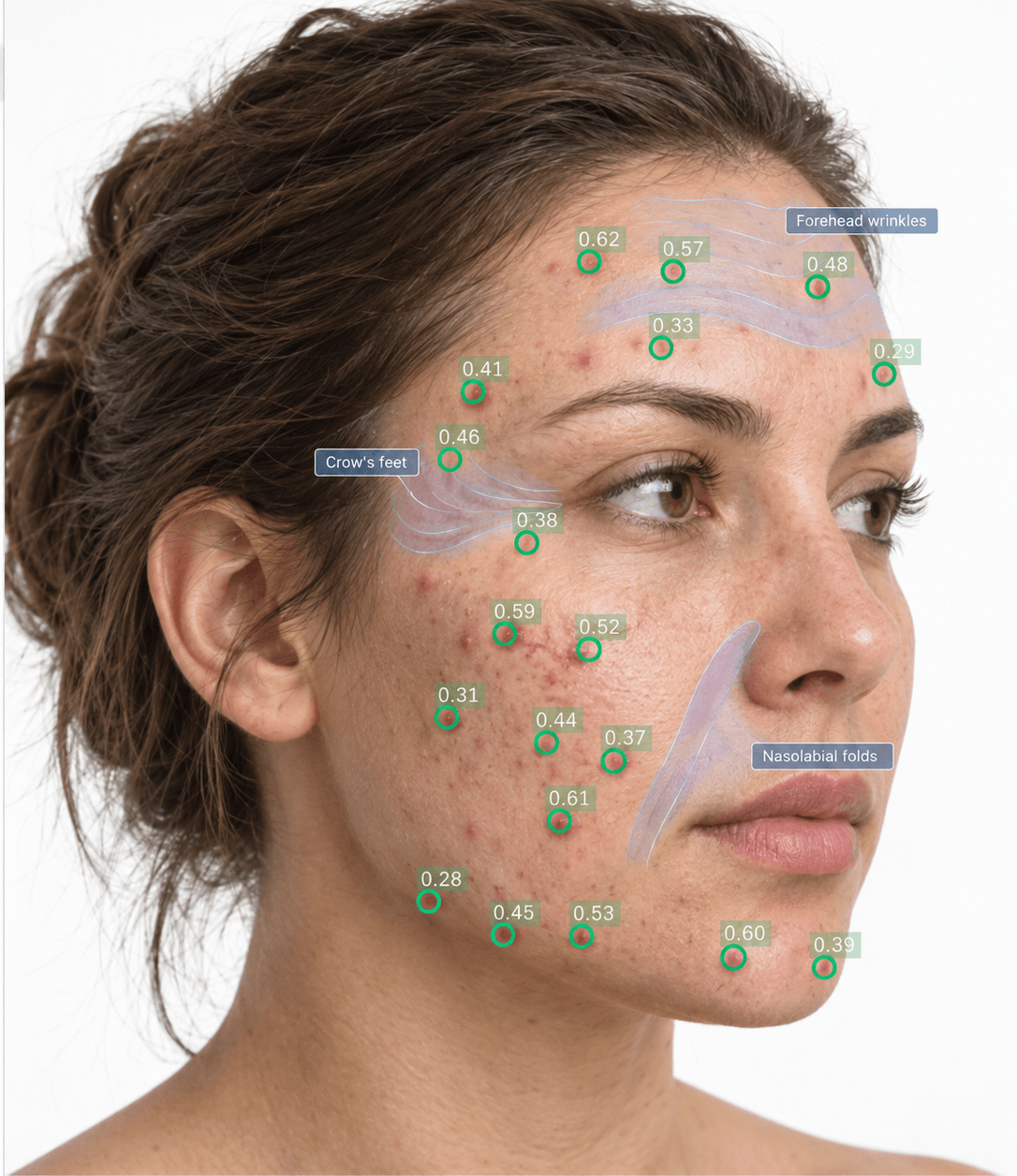
Hundreds of facial landmarks are located on the photo: eyes, brows, nose, lips, jawline, hairline. They anchor everything that follows, so a score sits on the same spot of the face in every analysis.
How brands typically respond
Nothing to configure. The animation carries the brand's look.
Face detection and quality check
What it does
In the live camera the face is found and the customer is guided into position: distance, angle, centering, lighting. The shutter only fires once one frontal, sharp, evenly lit face fills the frame. Blurry, dark, backlit or off-frame photos are rejected with a retake hint. Uploaded photos go through the same gate.
How brands typically respond
Keeps bad photos from producing confident but wrong scores. Nothing to configure.
Face mapping
What it does
The landmarks split the face into regions, T-zone and U-zone among them, so every parameter is read where it belongs and results are comparable between people and between two analyses of the same person.
How brands typically respond
Nothing to configure. The zones are what makes a combination skin type readable.
3D view
Optional
What it shows
The analyzed face rendered as a 3D model the customer can turn. Every mask follows the surface, so a parameter on the cheek or jawline is visible from the side, not only head-on. One switch between 2D and 3D in the report.
How brands typically respond
Switched on for brands that want the "see it on your own face" moment to carry the report. Off by default where a plain 2D view fits the brand better.
How it was built
Built with dermatologists. Our own models, our own labels.
Dermatologists from LMU Munich and cosmetic scientists from the University of Hamburg labeled the training images by hand. The analysis is not an LLM asked to guess: it runs on our own specialized computer vision models.

Dermatology

Cosmetic science

AI engineering
50,000+
images annotated by dermatologists and cosmetic scientists
Diverse
lighting: daylight, indoor and mixed light, shot on everyday smartphones
I–VI
Fitzpatrick skin tones. Works for all ethnicities
1
Real skin, all tones, all ethnicities
Images from real people across skin types, conditions, skin tones and ethnicities. The dataset was built to cover Fitzpatrick I to VI, not to be representative of one market. No stock imagery, no synthetic faces.
2
Labeled by medical professionals, image by image
Dermatologists and medical doctors from LMU Munich and cosmetic scientists from the University of Hamburg marked every region: where redness sits, which spots count as blemishes, what pores look like at 0 and at 100. The labels are the ground truth the models learn.
Dermatologists · LMU Munich
Medical doctors
Cosmetic scientists · University of Hamburg
3
Proprietary computer vision models
Segmentation, classification and detection models read the skin, the skin type and the blemishes, a generative model renders the melanin view. Built, trained and owned by Thea Care. No LLM looks at the skin.
Consistency
How stable is it, and what keeps it that way.
Lighting changes minute to minute and no two phones see color the same way. A result that swings between two selfies is worse than no result. Four measures help keep results consistent.
88%
agreement with the expert panel
1,000 customer photos, one per person
93%
same result on a second photo
300 photos, same people, varied lighting
Internal validation against a panel of dermatologists and cosmetic scientists, majority vote per image.
Per-parameter results and method in the accuracy guideBefore the photo
Camera guidance
Live hints on distance, angle and light. "Face the window" removes more variance than any model tweak.
Before the analysis
Image quality gate
Blurry, dark, backlit or off-frame photos are rejected with a retake hint instead of producing a confident wrong score.
In the analysis
Light normalization and confidence
Color and exposure are normalized before the models run. Low-confidence regions are down-weighted, not reported as fact.
Every training round
Retrained on relabeled edge cases
Photos that produced unstable results are relabeled by the dermatology team and fed into the next controlled training round. The model does not learn from user behavior, it learns from labels.
The customer's path
Five screens from "curious" to "routine in the cart".
What a shopper walks through, in the brand's colors and words. Under a minute end to end.
Swipe to see all five steps →
1
Start
Entry from a product page, the navigation, a newsletter or an ad. Brand logo, brand words.




2
Instructions
Four things that decide photo quality, shown before the camera opens. Upload instead of camera is possible.
3
Camera
Live checks on light and position before the shutter fires. Blurry, dark or off-frame photos are rejected with a retake hint.
4
Analysis
Skin type and eight parameters, each drawn on the customer's own face, switchable view by view. Optional short questionnaire while the models run.
5
Report
Skin type, top concerns and a step-by-step routine from your range, with the scores and views one tap away. Straight into the cart, or sent by e-mail.

Anatomy of a report
What the customer takes away, and what you learn.
1
Skin type and skin age
The two headline results, in the brand's chips. Age is optional and can be switched off.
2
Most important skin needs
The concerns that drive the routine, each with a one-line care hint the customer can act on without buying anything.
3
Routine in steps, ready to buy
Clean, treat, care, or whatever steps your range defines. Product, rating, one line of why, price, add-to-cart. An announcement bar carries your offer or discount code for the full routine.
4
Report by e-mail: a subscriber with a skin profile
"Save analysis" sends the report to the customer, opt-in. The brand gains a contact with skin type, concerns and routine attached, synced to the CRM. That is what makes re-engagement specific: replenishment reminders, routine step-ups, seasonal switches.
5
Every order, tracked
Purchases that start in the analysis show up in your dashboard, direct and indirect. Shopify today, more shop systems coming.
How the routine is chosen
From selfie to routine: how a recommendation is made.
Transparent by design: every recommendation can be traced back to the skin profile, the answers and your catalog. How much your team curates is up to you, from hand-set rules for a tight range to fully automatic matching across thousands of products.
Inputs
Read
Customer
Selfie
One photo from the phone camera. Quality-checked before anything runs.
Skin models
Skin profile
Skin type, eight parameters as levels or 0–100 scores, melanin view, skin tone, age.
Customer · optional
Questionnaire answers
Current routine, goals, known sensitivities. What the photo cannot see.
Weighting
Top concerns
Your team · dashboard
Brand rules
Eligible lines, price bands, bundles, what never to pair.
Tagged by Thea
Your catalog, tagged and filtered
Struck through: excluded by your rules.
How tagging works →Match
Matching engine
Every product scored against this skin
Profile and concerns meet each product's tags. Rules filter what is eligible. Each product gets a fit score, per routine step.
Transparent scoring, no black box
Reproducible: same profile and rules give the same routine
As curated or as automatic as your team wants
Runs against your live catalog, new product means new tags, nothing else
Result
Output
The routine
The best-fitting products for each routine step, each with the reason it was picked. Steps follow your portfolio. Whole routine or single product to cart.
See the analysis for yourself
Schedule a demo to discover how Thea's AI solutions can help you foster your customer engagement, brand awareness, trust, and conversions.